Cast once.
Ring for
five hundred years.
Tower bells, carillons, and single swinging bells, cast in bell bronze and tuned to true partials.
From sanctus bells to carillon bourdons.
Every bell is cast in loam and tuned on the lathe to its own five true partials — hum, prime, tierce, quint, and nominal.
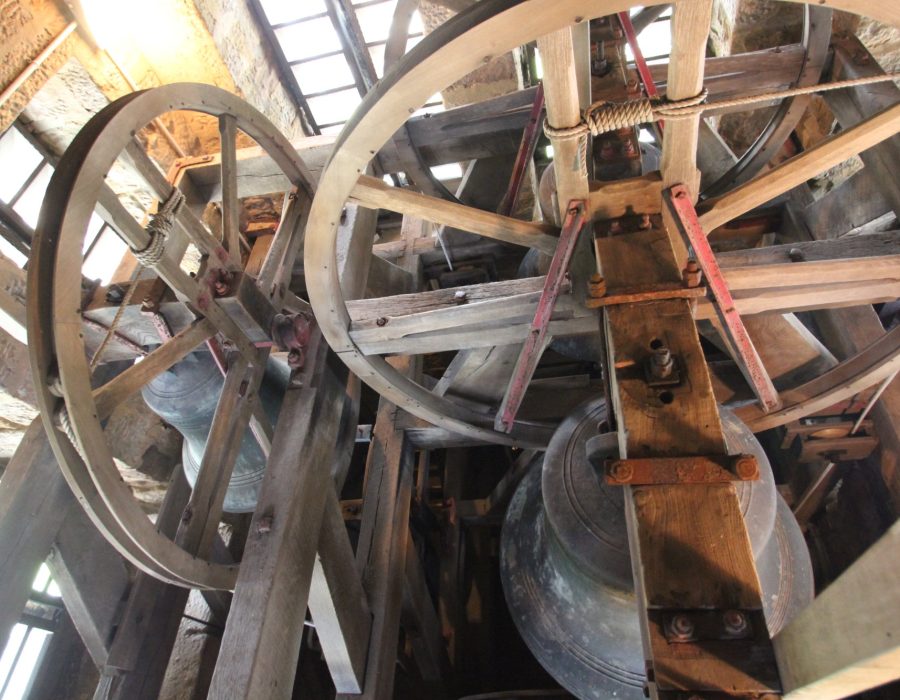
The Coldbrook Tenor, in D
The heaviest bell of St. Aidan's six, cast to anchor the ring on a true D and carry the whole peal's tone.
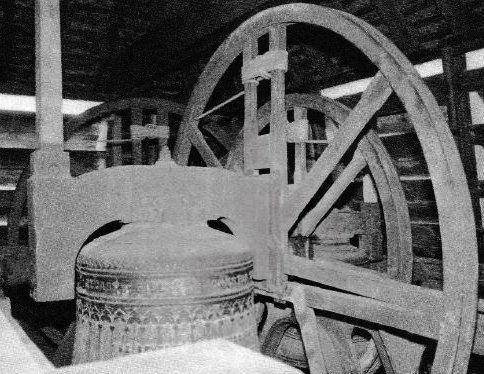
The Coldbrook Treble, in A
The lightest and highest bell of the same six-bell ring, tuned a fifth above the tenor's octave.
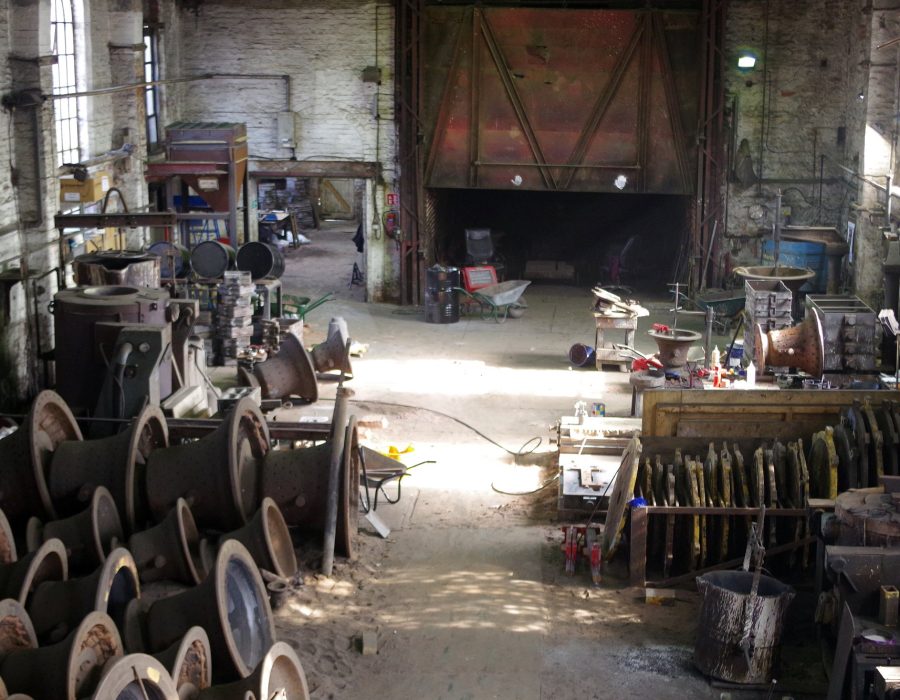
Harrowgate Single Swinging Bell, in F
A single call-to-worship bell for a parish with no ring, tuned to carry cleanly across open farmland.
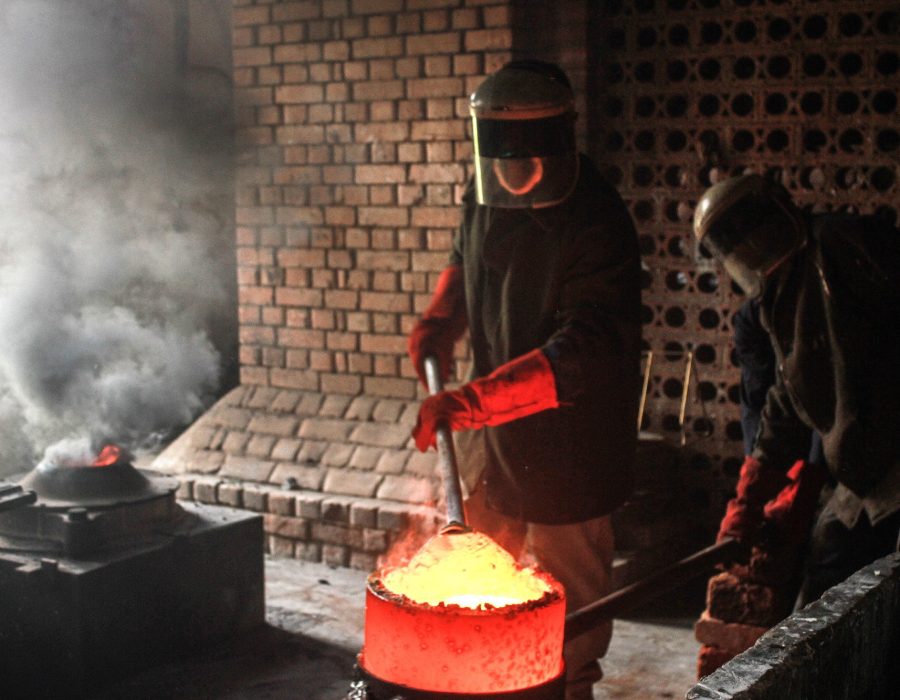
Millbrook Carillon Bourdon, in C
The bass bell of a 48-bell chromatic carillon — the largest single casting the foundry has poured.
Millbrook Carillon No. 12, in C
The smallest of the same 48-bell instrument's three chromatic octaves.
The Ashcombe Passing Bell, in B♭
A dedicated tolling bell for a memorial garden, cast to a deliberately sombre, slow-decaying tone.
Work out a bell's true partials.
The same relations the foundry reasons with at the tuning lathe — diameter, sound-bow thickness, and alloy genuinely drive the five predicted partial frequencies below, not a lookup table.
Modeled as a circular bronze plate's bending vibration (Rayleigh plate theory) — bigger and thicker genuinely change the predicted pitch in the correct real-world direction.
A ring of bells rings a real sequence.
Every method is built from plain hunting — bells swapping adjacent positions in a fixed alternating pattern until the row returns to rounds. Generated live below, not a static diagram.
From loam mould to true tune.
Pattern & Mould
A loam mould is built up over the bell's true profile — the "shape rule" — and rammed by hand, in stages, over a week or more.
Melt & Pour
Copper and tin are melted together to bell bronze, roughly 78% copper and 22% tin, and poured into the mould in a single continuous pour.
Cool & Break Out
The casting cools for days before the mould is broken away and the rough bell is cleaned of casting sand and fins.
Tune on the Lathe
The bell is turned on a vertical tuning lathe, and metal is shaved from the sound-bow and soundring until all five partials sit true.
Hang & Ring
The finished bell is fitted to a headstock and wheel, hung in its tower, and rung — the foundry's work checked the only way that matters.
Towers the foundry has hung bells in.
St. Aidan’s Church, Coldbrook
A full six-bell ring, the foundry's home parish and its first complete ring commission.
Coldbrook
Harrowgate Parish Church
A single call-to-worship bell for a rural parish with a one-bell tower.
Harrowgate
Millbrook University Chapel
A 48-bell chromatic carillon spanning four octaves, played from a mechanical keyboard console.
MillbrookWhat ringers and vicars say.
“The tenor came in exactly on the note the foundry promised, first strike. Our band has rung on plenty of bells that needed re-tuning within a year — this ring hasn't moved.”
Tower Captain, St. Aidan's, Coldbrook
“Forty-eight bells, tuned to one chromatic standard, and every single one of them sits true against its neighbours. That's not luck — that's a foundry that actually checks its own work.”
University Carillonneur, Millbrook
Tell us about your tower.
Single bell, full ring, or carillon — a founder will follow up within two business days with a real scope and quote.